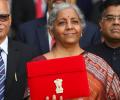
Had Finance Minister Sitharaman thought a little more about the middle class, disadvantaged sections, and the poor who are struggling, it would have been an inclusive Budget that would have made history, notes Ramesh Menon.

Their number is dwindling, but single-screens believe they have a place in the entertainment space

But it is disappointing to note that Sitharaman's third Union Budget continues to promote a few problematic ideas, observes A K Bhattacharya.

The high-level panel also asked the government to work towards re-orienting subsidies in a targeted manner from the crop sector to the non-crop sector and redesign the electronic National Agriculture Market.

'Aquaponics can effectively cushion the impact of a calamity like COVID.'

There was hope in some quarters that the interim Budget would boost sentiment and lay the groundwork for kick-starting the investment cycle, while staying on a path of fiscal consolidation.

Gandhi claimed that authoritarian tendencies are becoming clearer, with the erosion of fundamental rights being accompanied by a narrow imposition of conformity and obedience from dutiful citizens. voters polarised for electoral gains

Budget is widely seen as a test of Prime Minister Narendra Modi.

India believes rich nations should be away from farm subsidies.
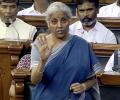
India is facing no risk of recession or stagflation as macroeconomic fundamentals of the economy are strong, Finance Minister Nirmala Sitharaman said on Monday. Replying to a debate on price rise in the Lok Sabha, she said the GST collection and Purchasing Managers' Index (PMI) are indicating that the Indian economy is getting more robust. The GST collection rose 28 per cent to touch the second-highest level of Rs 1.49 lakh crore in July. GST, introduced in July 2017, touched a record high of Rs 1.68 lakh crore in April 2022.
The focus is likely to be on consolidation and improvement of existing rural-centric programmes to ensure their completion ahead of the next general elections in 2019, rather than announcement of new schemes. Sanjeeb Mukherjee and Arup Roychoudhury report.

'I would recommend two parts to fiscal support. One, support the lower end of the society by direct intervention through ways such as direct benefit cash transfer. Second, give fiscal support to the stressed sectors in line with the Rs 3-lakh crore (Rs 3 trillion) emergency credit line guarantee norms'

Congress leader and ex-finance minister P Chidambaram on Tuesday said the Union Budget was the "most capitalist" with nothing for the poor and farmers while sops were being provided to big industrialists turning India into a very "unequal country". At a press conference after Union Finance Minister Nirmala Sitharaman unveiled a Rs 39.45 lakh crore Budget, he said because of the ruling party's "brute majority" the Lok Sabha pass the Budget but people will reject it. He claimed the Bharatiya Janata Party was going to elections, scheduled in five states, not with their performance or with the promises and assurances to the people, but solely "with the agenda of dividing the country and bringing Hindutva back to power".
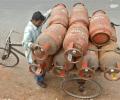
Rebuffing petroleum ministry, Siddaramaiah launches Pradhan Mantri Ujjwala Yojana-like scheme months before state polls
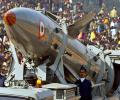
Free provision of food, cash transfers, and jobs in villages see enhanced flow of funds despite a precipitous fall in revenue. Till May, defence spend was nearly 30 per cent less than the previous year.
By any economic theory or doctrine, this is no Budget that supports economic recovery, whether through supporting aggregate demand, or through expansionary stimulus, declares Rathin Roy.


Sharad Pawar reckons that the NCP has value as a united, going concern, not as a gaggle of leaders in search of followers, notes Shreekant Sambrani.

Sitharaman also announced Rs 10,000 crore fund to support 2 lakh micro food enterprises for promoting health and wellness, herbal, organic and nutritional products.

There is no foodgrain shortage in the country as our total storage capacity is more than 81 million tonnes, while the public distribution system requirement is 61 million tonnes, says Ram Vilas Paswan.

The G20 chair has suggested three areas for the talks in Argentina - the future of work, infrastructure for development and a sustainable food future, areas where India has a lot at stake.
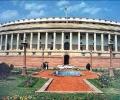
The government has decided to give a Rs 3,000-crore (Rs 30-billion) cash subsidy to fertiliser companies and put in another Rs 800 crore (Rs 8 billion) in Air India. Oil marketing companies, though, are unlikely to get any subsidy for the losses they incur on selling cooking fuel at subsidised rates in the current year.
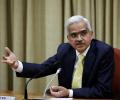
The Reserve Bank remains laser-focused to bring back retail inflation to 4 per cent over a period of time in a non-disruptive manner, Governor Shaktikanta Das stressed while voting for status quo in interest rates, as per minutes of the October policy meeting released on Friday. The central bank has been mandated by the government to ensure the Consumer Price Index (CPI) based inflation is at 4 per cent, with a band of 2 per cent on either side. The retail inflation, which was above 6 per cent during May and June, has started moving down and stood at 4.35 per cent in September.

'We expect the new government to look into the issue of penalties imposed on technology firms involved in UID related projects.'
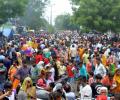
On the ground, rural medical infrastructure and more crucially, women's access to reproductive health services is practically non-existent in Uttar Pradesh, reports Geetanjali Krishna.

The Centre also referred to various international economic reports and surveys to emphasise on the need for Aadhaar.

Without making any direct reference to the three new farm reform laws or to the three-month-old agitation by farmers, Modi said there is a need for expanding options for the country's farming community to sell agri produce.
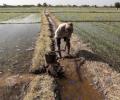
Bharat Krishak Samaj demanded that the Pradhan Mantri Fasal Bima Yojana should be replaced with a new crop insurance and compensation scheme.

Farm loan waivers should not be regarded as expenditure but as incentive and investment, argues B S Raghavan, the distinguished civil servant.

'Chief Minister Devendra Fadnavis called us for a meeting in March 2016 and we submitted the same charter of demands that we are submitting now.' 'He gave us wishy-washy assurances.' 'We thought he was the new chief minister and we believed him, but later we found out that nothing is moving on the ground.' 'This time we want a written assurance and a concrete timetable for implementation.' 'We will not leave Mumbai, come what may.'
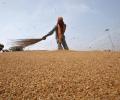
Trade ministers from 162 WTO countries will gather in Kenya's capital from Dec. 15-18 to work on an agreement to liberalise global trade.

India must streamline reforms, only then it will see success.

Finance Minister Arun Jaitley presented the Union Budget.

Soft crude prices will cut fuel subsidy bill and help contain fiscal slippage this year.

The means to do so via an expanded Aadhaar system is easily at hand, too.
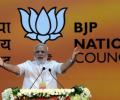
In a veiled attack on Congress and Samajwadi Party, Prime Minister Narendra Modi accused them of continuing to practice vote-bank politics to divide society and asserted that disturbance of peace and harmony will not be tolerated.
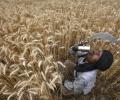
Nirmala Sitharaman's maiden Budget has not disappointed but vision and details, particularly for the revival of agriculture, are missing.
In May, Satpal Singh, who runs a dairy business with three buffaloes in Jewar, near Noida, was worried about the steep spike in input costs. Singh said dry fodder rates, which cost Rs 1,500-2000 per tractor trolley last year, were quoting at Rs 4,500-5,000. The price of other cattle feed ingredients (that include mustard meal and similar mixes) had also gone up from Rs 2,000 per quintal to Rs 3,100-3,200 per quintal.

"There have been discussions on implementing UBI in J&K -- not just as a pilot in some districts, but in the entire state, according to Drabu's proposal in the state's Budget," said an official. "Finance Minister Arun Jaitley is also supportive of the idea. A presentation will now be made at the PMO."

A day before the crucial talks between the Centre and the protesting farmer unions, Union Agriculture Minister Narendra Singh Tomar on Thursday said the government is ready to consider any proposal other than repeal of three farm laws, the key demand of the farmers.
